

On this page
In classical Sanskrit texts, food is designated as Mahabhaishajya - the supreme medicine. Yet modern eating has deteriorated into a transactional calculation of calories, grams of protein, and glycemic indexes. Ayurveda teaches that how, when, and in what combination you consume food determines whether it converts into radiant Ojas or toxic Ama. Food is biological support for your unique life, not an oppressive set of dogmatic rules.
1. The 8 Classical Rules of Food Intake (Ashta Ahara Vidhi)
Caraka details eight critical factors: Prakriti (intrinsic food nature), Karana (processing and cooking), Samyoga (combination), Rashi (portion quantity), Desha (habitat and climate), Kala (time and season), Upayoga Samstha (rules of consumption), and Upabhokta (the individual constitution).
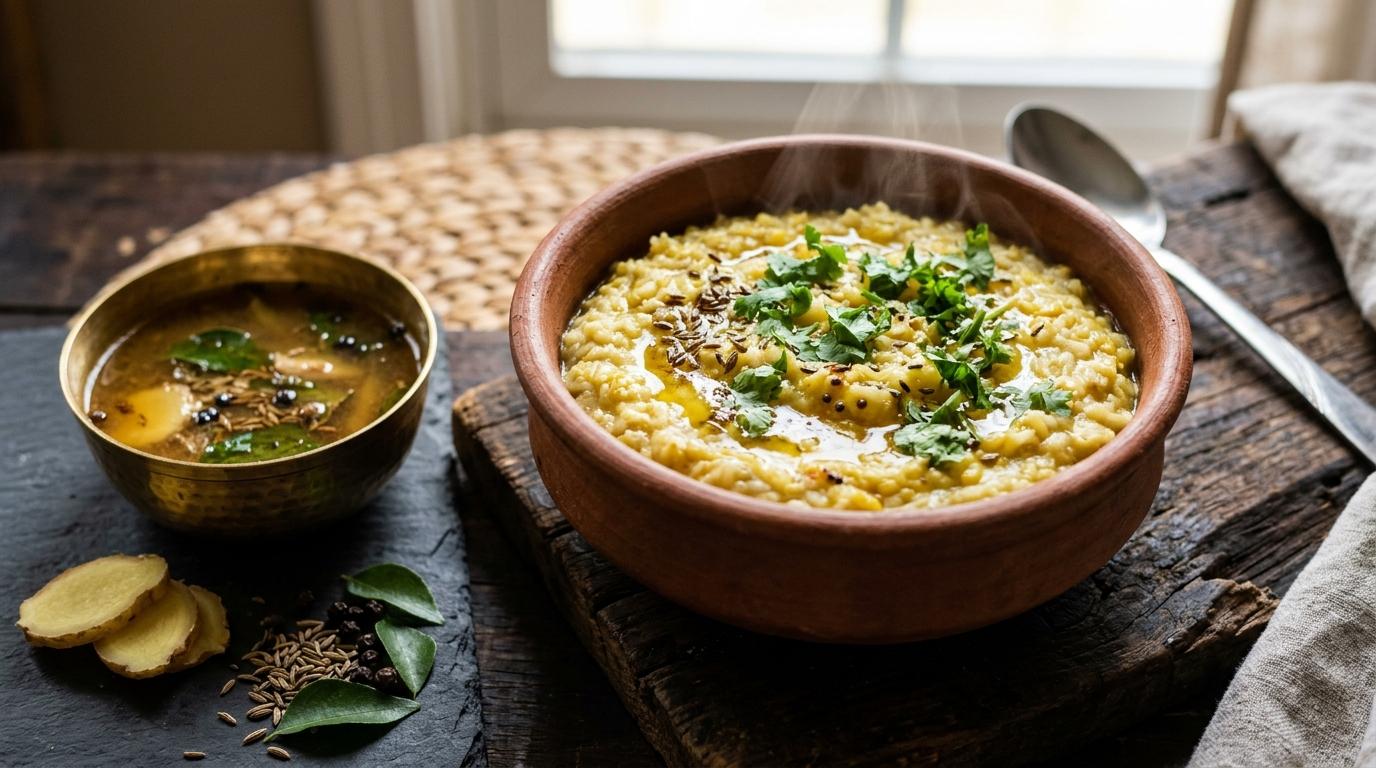
Processing (Karana) alters bio-energetics: raw rice is heavy and hard to digest, but when roasted and boiled into Manda (gruel supernatant), it becomes light, easily assimilable, and ignites digestive Agni.
Portion control is personalized through the palm measure (Anjali). One's two cupped hands joined together represent the volume of solid food the stomach can digest without mechanical strain.
“तत्रेदं शरीरमाहारसम्भवम् - This human physical vessel is manufactured directly from food; disease is equally born from erroneous food.” - Caraka Saṃhitā Sūtrasthāna 28.45
2. Viruddha Ahara: Recognizing Incompatible Food Combinations
Certain foods are wholesome when eaten alone, but become toxic when combined due to conflicting potencies (Virya) or post-digestive transformations (Vipaka). Caraka delineates 18 categories of Viruddha Ahara.
Classic examples include combining fish with milk (conflicting Virya causes blood vitiation), heating honey above body temperature (alters chemical bonds into toxic Ama-Visha), or consuming equal quantities of ghee and honey by weight.
Long-term ingestion of incompatible combinations impairs immune surveillance, leading to chronic skin disorders (Kushtha), hormonal dysregulation, and autoimmune conditions.
3. The Psychological Dimension of Nourishment (Manas & Ahara)
Eating while stressed, distracted, angry, or hurried shuts down parasympathetic digestive secretions. Classical texts mandate: 'Tanmana Bhunjita' - eat with a focused, peaceful mind in a clean, aesthetic environment.
Digestion begins in the mind. When you look at freshly prepared food with appreciation, olfactory and visual pathways stimulate Jatharagni before the first bite enters your mouth.
4. Practical Kitchen Guidelines for Daily Culinary Harmony
Cook with unrefined, unctuous fats: pure cow ghee, cold-pressed sesame oil, or coconut oil depending on your constitution.
Use digestive spices as medicine: cumin, coriander, and fennel (CCF) balance all three Doshas; ginger and black pepper stimulate sluggish Agni; cardamom and cinnamon soothe nervous tension.
| Incompatible Combination | Physiological Conflict | Ayurvedic Consequence | Wholesome Alternative |
|---|---|---|---|
| Milk and Sour Fruits (Citrus, Berries) | Sour taste curdles milk protein in the stomach; conflicting Virya (heating vs cooling). | Triggers toxic Ama, skin rashes, and sluggish lymphatic circulation. | Consume sweet fruits (ripe sweet mango, dates) with milk, or eat sour fruits separately. |
| Heated or Cooked Honey | Heating honey beyond 40°C denatures enzymes and binds molecular toxins (Ama-Visha). | Creates stubborn, sticky channel blockage that resists elimination. | Add honey only to lukewarm beverages below drinking temperature, never boiling. |
| Yogurt (Curd) at Night | Heavy, unctuous, channel-blocking (Abhishyandi); clogs micro-channels during sleep. | Exacerbates sinusitis, asthma, joint stiffness, and acne. | Consume fresh buttermilk (Takra) spiced with roasted cumin and rock salt at lunch. |
| Equal parts Ghee and Honey by weight | Produces toxic metabolic interaction when consumed in exact 1:1 weight proportions. | Interferes with enzymatic cellular metabolism. | Always combine in unequal proportions (e.g. 2:1 or 1:2 by weight). |
Key takeaways
- Food is biological medicine; its therapeutic value depends on cooking, combination, and timing.
- Avoid classical food incompatibilities (Viruddha Ahara) to protect systemic cellular immunity.
- Eat with mindful presence (Tanmana Bhunjita) to activate optimal parasympathetic digestion.
- Use culinary spices strategically to adapt daily meals to your personal digestive strength.